
VIP member
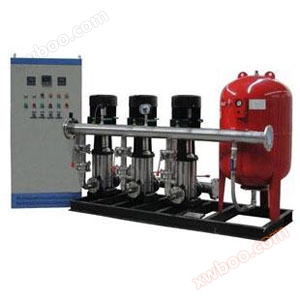
Variable frequency secondary pressurization and constant pressure equipment
Release time: August 5, 2013 5:17:12 1. Domestic water supply for ordinary residential buildings, commercial and residential buildings, and residentia
Product details
1 Characteristics of frequency conversion secondary pressurization and constant pressure equipment
a、 Automatic isolation valve or throttling device (optional): Used to isolate municipal water sources, the operating pressure can be set arbitrarily. When the municipal water source pressure is lower than this value, the isolation device will operate and switch to the water source tank or pressurized water tank for water supply. It is also possible to consider using inexpensive throttling devices instead of isolation valves to limit the inflow rate, and compensate for the insufficient water supply by relying on the water source tank.
b、 Water source tank: During water supply operation, the entire volume of the tank is filled with water. Due to the lack of compressed air energy storage, the buffering effect on various impacts and the dynamic compensation effect on municipal water sources are not as good as buffer tanks. But when the pressure of the municipal water source is too low and the outflow (water supply) from the water source tank is greater than the inflow, the storage capacity in the tank can be used entirely to compensate for the shortage of the municipal water source. During the period when the water source tank provides compensatory water volume, air is automatically introduced into the tank by a vacuum suppressor, which can avoid negative pressure suction on the high and low pipe networks (i.e. no negative pressure and no suction stroke). The water source tank can only be connected in series in the inlet pipeline for use.
c、 Pressure bearing water tank: generally a reinforced concrete structure, with the same working principle as the water source tank. Due to its large volume, it has a good peak shaving and valley filling effect on municipal water supply, and is suitable for various municipal water source situations across the country. When the municipal water supply network is shut down due to unforeseen circumstances, a pressurized water tank can provide a certain amount of water supply for a certain period of time, which is suitable for situations where customers require highly reliable water supply.
d、 Water pump unit: Our company selects water pumps with non overload characteristics, which can adapt to pressure changes within a large range of municipal water sources and will not cause overload phenomena.
e、 Pressure tank: Its function is the same as that of the pressure tank in typical two-stage pressurized water supply equipment. The standard product design uses a diaphragm micro pressure tank, mainly utilizing its pressure holding function, which is conducive to the intelligent automatic energy-saving control of the equipment.
f、 Variable frequency control cabinet: The full frequency conversion technology solution can be selected, which means that all water pumps are driven by variable frequency, or a partial frequency conversion technology solution can be used (only one pump is driven by variable frequency speed regulation).
g、 Bypass pipeline: If the municipal water supply meets the water and gas requirements during normal times and the pressure is insufficient only during peak water supply periods, a bypass pipeline can be installed to automatically switch between direct municipal water supply and pressurized water supply. When in non fire state, the fire automatic inspection control equipment composed of TH-F series automatic inspection complete water supply equipment can automatically inspect and operate the fire pump. The automatic inspection cycle can be selected from several hours to hundreds of hours, and the cycle clock automatically starts the inspection program with manual inspection function. During the inspection, the digital intelligent fire inspection controller will check and confirm that the main circuit of the fire control cabinet is normal, and then drive each fire pump to run at low speed. At this time, the driving power is very small, about one percent of the rated power of the pump motor, so the energy saving is significant. Due to the low rotational speed, there will be no pressure increase on the water supply network.
b、 Water source tank: During water supply operation, the entire volume of the tank is filled with water. Due to the lack of compressed air energy storage, the buffering effect on various impacts and the dynamic compensation effect on municipal water sources are not as good as buffer tanks. But when the pressure of the municipal water source is too low and the outflow (water supply) from the water source tank is greater than the inflow, the storage capacity in the tank can be used entirely to compensate for the shortage of the municipal water source. During the period when the water source tank provides compensatory water volume, air is automatically introduced into the tank by a vacuum suppressor, which can avoid negative pressure suction on the high and low pipe networks (i.e. no negative pressure and no suction stroke). The water source tank can only be connected in series in the inlet pipeline for use.
c、 Pressure bearing water tank: generally a reinforced concrete structure, with the same working principle as the water source tank. Due to its large volume, it has a good peak shaving and valley filling effect on municipal water supply, and is suitable for various municipal water source situations across the country. When the municipal water supply network is shut down due to unforeseen circumstances, a pressurized water tank can provide a certain amount of water supply for a certain period of time, which is suitable for situations where customers require highly reliable water supply.
d、 Water pump unit: Our company selects water pumps with non overload characteristics, which can adapt to pressure changes within a large range of municipal water sources and will not cause overload phenomena.
e、 Pressure tank: Its function is the same as that of the pressure tank in typical two-stage pressurized water supply equipment. The standard product design uses a diaphragm micro pressure tank, mainly utilizing its pressure holding function, which is conducive to the intelligent automatic energy-saving control of the equipment.
f、 Variable frequency control cabinet: The full frequency conversion technology solution can be selected, which means that all water pumps are driven by variable frequency, or a partial frequency conversion technology solution can be used (only one pump is driven by variable frequency speed regulation).
g、 Bypass pipeline: If the municipal water supply meets the water and gas requirements during normal times and the pressure is insufficient only during peak water supply periods, a bypass pipeline can be installed to automatically switch between direct municipal water supply and pressurized water supply. When in non fire state, the fire automatic inspection control equipment composed of TH-F series automatic inspection complete water supply equipment can automatically inspect and operate the fire pump. The automatic inspection cycle can be selected from several hours to hundreds of hours, and the cycle clock automatically starts the inspection program with manual inspection function. During the inspection, the digital intelligent fire inspection controller will check and confirm that the main circuit of the fire control cabinet is normal, and then drive each fire pump to run at low speed. At this time, the driving power is very small, about one percent of the rated power of the pump motor, so the energy saving is significant. Due to the low rotational speed, there will be no pressure increase on the water supply network.
2 Scope of application for frequency conversion secondary pressurization and constant pressure equipment
1. Domestic water supply for ordinary residential buildings, commercial and residential buildings, and residential communities.
2. Domestic water supply for high-rise buildings, high-end hotels and restaurants.
3. Domestic water supply for buildings such as comprehensive buildings, office buildings, clubs, etc.
4. Various types of waterworks and water supply booster pump stations.
5. Process water for production, domestic water supply, and constant pressure supply in industrial and mining enterprises.
6. Hot water supply system or hot water heating system for residential areas, high-rise buildings, etc.
7. Various types of circulating water and cooling water supply systems.
8. Deep water well (deep well pump, submersible pump) constant pressure water supply system.
9. Automatic control water supply system for sewage treatment plants and drainage stations.
10. Petroleum, chemical and other industries transport petroleum and liquid systems containing acid and alkali.
2. Domestic water supply for high-rise buildings, high-end hotels and restaurants.
3. Domestic water supply for buildings such as comprehensive buildings, office buildings, clubs, etc.
4. Various types of waterworks and water supply booster pump stations.
5. Process water for production, domestic water supply, and constant pressure supply in industrial and mining enterprises.
6. Hot water supply system or hot water heating system for residential areas, high-rise buildings, etc.
7. Various types of circulating water and cooling water supply systems.
8. Deep water well (deep well pump, submersible pump) constant pressure water supply system.
9. Automatic control water supply system for sewage treatment plants and drainage stations.
10. Petroleum, chemical and other industries transport petroleum and liquid systems containing acid and alkali.
3 The principle of variable frequency water supply controller
1. The near water port of the variable frequency water supply controller pump is connected to the pressure regulator compensator, and the monitoring and control microcomputer constantly monitors the pressure inside the pressure regulator compensator. By controlling the negative pressure relief device, the pressure of the pressure regulator compensator and the near water of the tap water is stabilized, so as not to generate negative pressure, thereby ensuring the normal water supply of the tap water pipeline network.
2. When the pressure of the tap water is lower than the user's required pressure, the monitoring and control microcomputer automatically controls the variable frequency soft start operation of the booster pump until the actual pressure of the outlet pipe of the variable frequency water supply controller is equal to the set user pressure. Only then does the monitoring and control microcomputer control the constant speed operation of the booster variable frequency water supply controller to maintain the actual pressure at the same level as the set user pressure. The higher the pressure of tap water, the lower the speed of the variable frequency water supply controller. The lower the pressure of tap water, the higher the speed of the pressurized variable frequency water supply controller. When the pressure of tap water is equal to the set user pressure, the variable frequency water supply controller stops working. On the basis of traditional variable frequency water supply for energy conservation, it also fully utilizes the existing pressure of the tap water pipeline network, and supplements it according to the difference, further saving energy.
3. The variable frequency water supply controller will automatically shut down when the tap water stops, and the incoming water will automatically turn on. If there is a power outage, the tap water supply will resume at normal pressure.
2. When the pressure of the tap water is lower than the user's required pressure, the monitoring and control microcomputer automatically controls the variable frequency soft start operation of the booster pump until the actual pressure of the outlet pipe of the variable frequency water supply controller is equal to the set user pressure. Only then does the monitoring and control microcomputer control the constant speed operation of the booster variable frequency water supply controller to maintain the actual pressure at the same level as the set user pressure. The higher the pressure of tap water, the lower the speed of the variable frequency water supply controller. The lower the pressure of tap water, the higher the speed of the pressurized variable frequency water supply controller. When the pressure of tap water is equal to the set user pressure, the variable frequency water supply controller stops working. On the basis of traditional variable frequency water supply for energy conservation, it also fully utilizes the existing pressure of the tap water pipeline network, and supplements it according to the difference, further saving energy.
3. The variable frequency water supply controller will automatically shut down when the tap water stops, and the incoming water will automatically turn on. If there is a power outage, the tap water supply will resume at normal pressure.
4 Installation, use and maintenance of secondary pressurized water supply equipment
1. The installation of this equipment should be carried out in a well ventilated, dust-free, and non humid environment with a humidity range of -10 ℃ to 40 ℃. Rainproof and lightning protection facilities should be installed outdoors.
2. For the convenience of equipment installation and maintenance, a 70cm space should be left around the equipment, a 1.5m space should be reserved at the manhole, and drainage ditches should be set up on the surrounding ground.
3. After selecting the site, the foundation should be prepared and the tank support seat should be poured with concrete or built with bricks and stones. After the base is completely cured, lift the tank and stabilize it, then install the accessories and turn on the power.
4. Before the test drive, the water supply valve should be closed first, and the condition of each sealing valve should be checked to ensure that there is no leakage. After driving, attention should be paid to the direction of the pump. When the pressure gauge pointer reaches the upper limit, the pump automatically stops. Open the water supply valve to supply water normally. If timed water supply is required, turn the selection switch to the manual position.
5. The pump unit of this equipment should be regularly inspected, maintained, and lubricated. If leakage is found in centrifugal pumps and check valves, the flange screws should be tightened or asbestos roots replaced in a timely manner. The pump foot bolts should be checked to prevent damage to the machine.
6. The electrical automatic control system should be waterproof and dustproof, and the insulation of the circuit should be checked regularly to ensure that the connecting bolts are loose and the fuses are intact. Wrap the pressure gauge with transparent material to prevent damage.
7. If the paint peeling off is found on the tank, it should be painted and maintained in a timely manner to extend its service life.
2. For the convenience of equipment installation and maintenance, a 70cm space should be left around the equipment, a 1.5m space should be reserved at the manhole, and drainage ditches should be set up on the surrounding ground.
3. After selecting the site, the foundation should be prepared and the tank support seat should be poured with concrete or built with bricks and stones. After the base is completely cured, lift the tank and stabilize it, then install the accessories and turn on the power.
4. Before the test drive, the water supply valve should be closed first, and the condition of each sealing valve should be checked to ensure that there is no leakage. After driving, attention should be paid to the direction of the pump. When the pressure gauge pointer reaches the upper limit, the pump automatically stops. Open the water supply valve to supply water normally. If timed water supply is required, turn the selection switch to the manual position.
5. The pump unit of this equipment should be regularly inspected, maintained, and lubricated. If leakage is found in centrifugal pumps and check valves, the flange screws should be tightened or asbestos roots replaced in a timely manner. The pump foot bolts should be checked to prevent damage to the machine.
6. The electrical automatic control system should be waterproof and dustproof, and the insulation of the circuit should be checked regularly to ensure that the connecting bolts are loose and the fuses are intact. Wrap the pressure gauge with transparent material to prevent damage.
7. If the paint peeling off is found on the tank, it should be painted and maintained in a timely manner to extend its service life.
5 Use case of frequency conversion secondary pressurization and constant pressure equipment
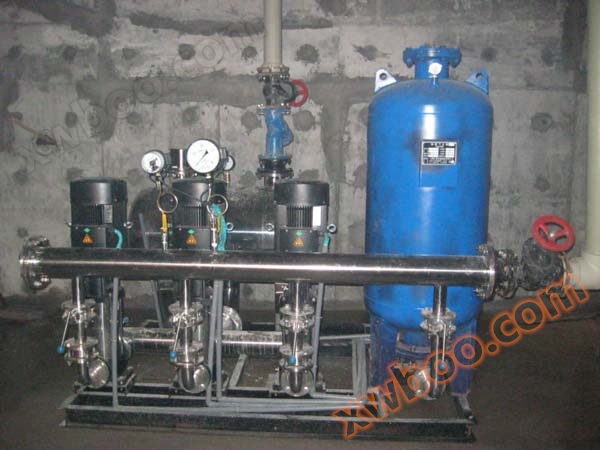
On site use of frequency conversion secondary pressurization and constant pressure equipment
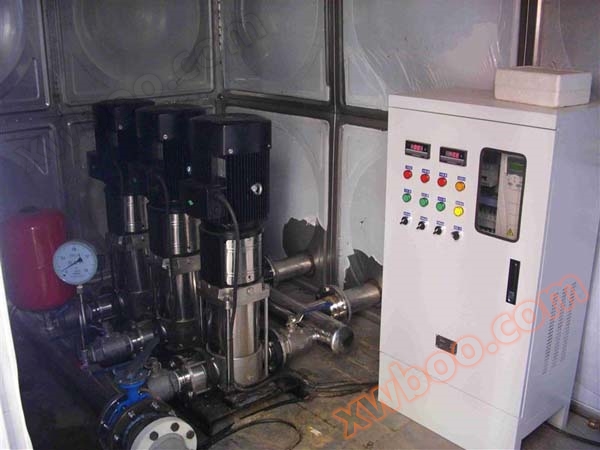
On site use of frequency conversion secondary pressurization and constant pressure equipment
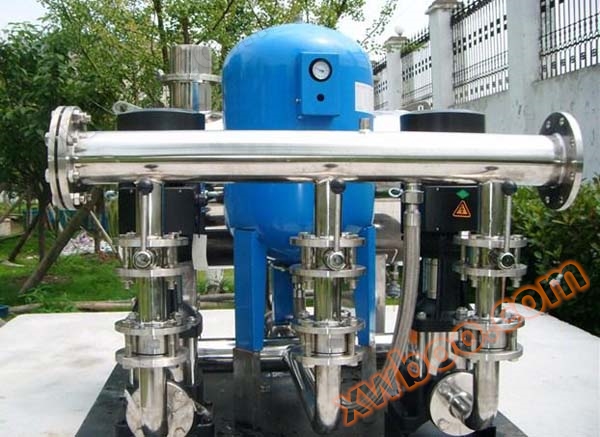
On site use of frequency conversion secondary pressurization and constant pressure equipment
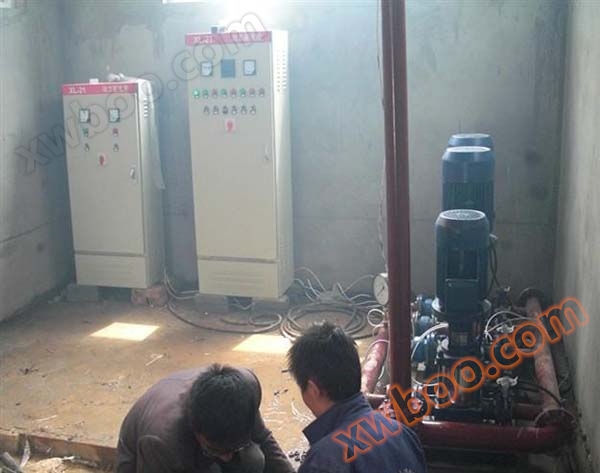
Installation site of frequency conversion secondary pressurization and constant pressure equipment
Online inquiry
-
Contacts
-
Company
-
Telephone
-
Email
-
WeChat
-
Verification Code
-
Message Content
-